Case study
Homestore Seeing the price of every variant
In home equipment, one product exists in six versions that do not cost the same. We built the store where you see the variant and its price without opening six pages.

The context
Homestore sells home equipment online.
This trade has a difficulty all of its own: almost nothing sells in a single version. The same piece of furniture comes in three finishes, the same covering in six colourways, and the prices do not follow — the expensive variant is not always the one you would expect.
On most stores, the buyer discovers this one page at a time. They open the reference, pick a colour, note the price, go back, start again. By the third round trip they have stopped comparing: they take what is in front of them, or they leave.
What we produced
A bespoke online store, built around comparison.
The variant’s price, on hover
Every product is presented with high-quality images and a clear list of the available variants. Hovering over a product shows the price of each version instantly.
It is a tiny gesture, and it changes the nature of the visit. Comparing stops being an exercise in memory — the buyer sees the gap instead of reconstructing it.
Navigation that does not force you to browse
Categories, filters and search were reworked to keep the journey short. In home equipment the visitor rarely arrives at random: they have a room, a constraint and a budget. The site’s job is to take them to what matches, not to walk them through the catalogue.
Customisation, price included
For configurable products, the options are available with a real-time price update. The same principle as for the variants: nothing gets decided on an estimate.
Product pages complete enough to decide on
Detailed description, specifications, customer reviews: every page carries enough to settle the question without looking elsewhere. A buyer who has to open another tab for reassurance often opens a competitor’s.
What it changes
The site does not try to hold the visitor: it tries to help them decide quickly. That is a less flattering goal than “engagement”, and a far more useful one in home equipment — where hesitation does not turn into consideration, it turns into abandonment.
What Homestore gained is not a better-looking catalogue. It is a catalogue that can be compared.
More work
Also worth a look
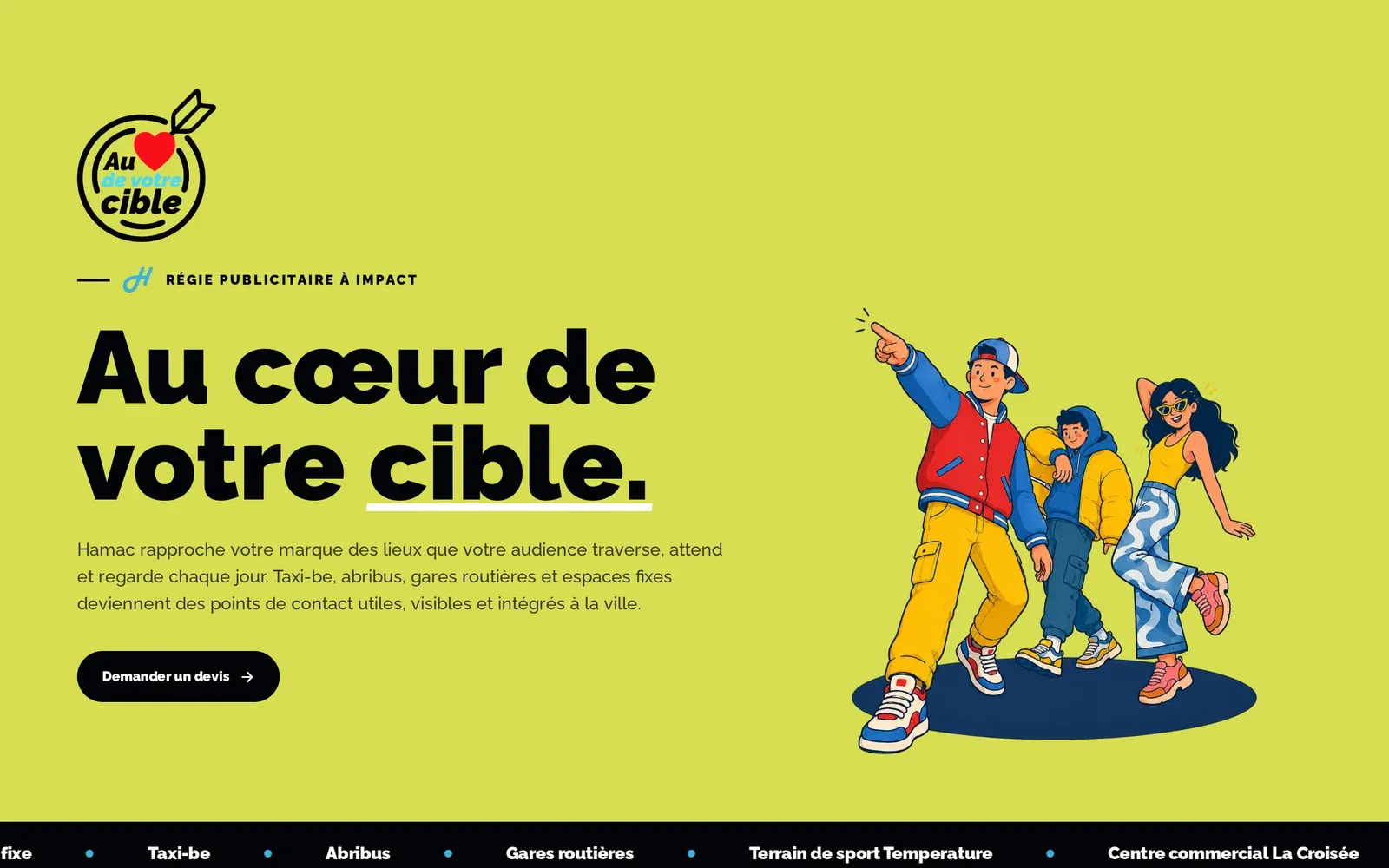
Hamac
Hamac – Selling outdoor advertising to people who live online
An advertising broker whose inventory sits in places rather than on billboards. We built the site that collects already-qualified quote requests — then, month after month, the content that argues for outdoor advertising where the advertisers actually are: online.

Jeune Patronat de Madagascar
Jeune Patronat de Madagascar – Making a first edition feel like a fixture
The Jeune Patronat de Madagascar was launching its first major entrepreneurs' gathering. In three months Takamoa built the whole thing — identity, content, video, landing page, campaigns — and handed the stage to a host created with artificial intelligence.
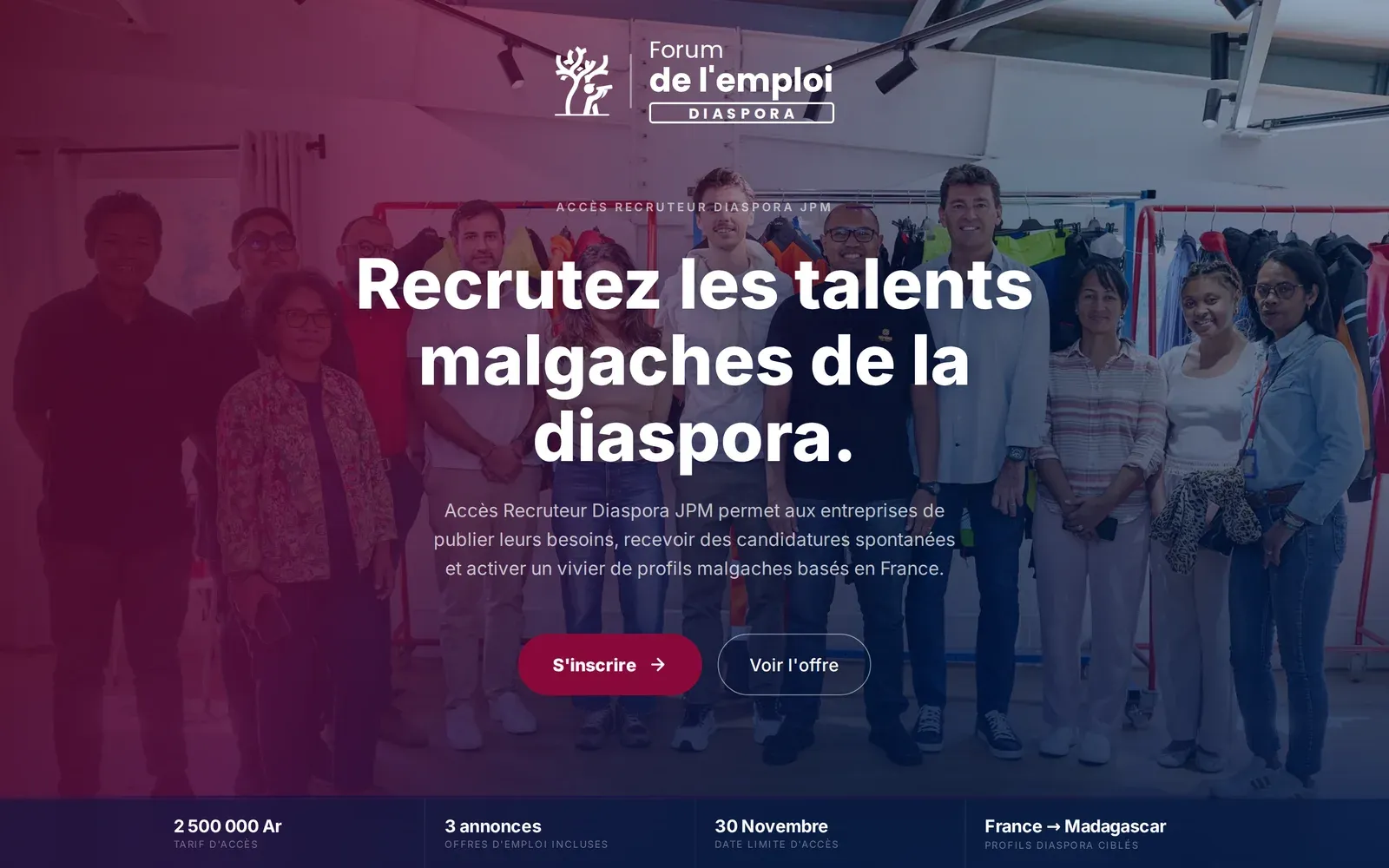
Jeune Patronat de Madagascar
Jeune Patronat de Madagascar – Recruiting at the forum without flying to Paris
The Diaspora job forum brought Malagasy companies and diaspora talent together in Paris for a job-dating event. We built the platform that stretches those two days into five months, and opens them to the companies that could not make the trip.