Case study
Hamac Selling outdoor advertising to people who live online
An advertising broker whose inventory sits in places rather than on billboards. We built the site that collects already-qualified quote requests — then, month after month, the content that argues for outdoor advertising where the advertisers actually are: online.
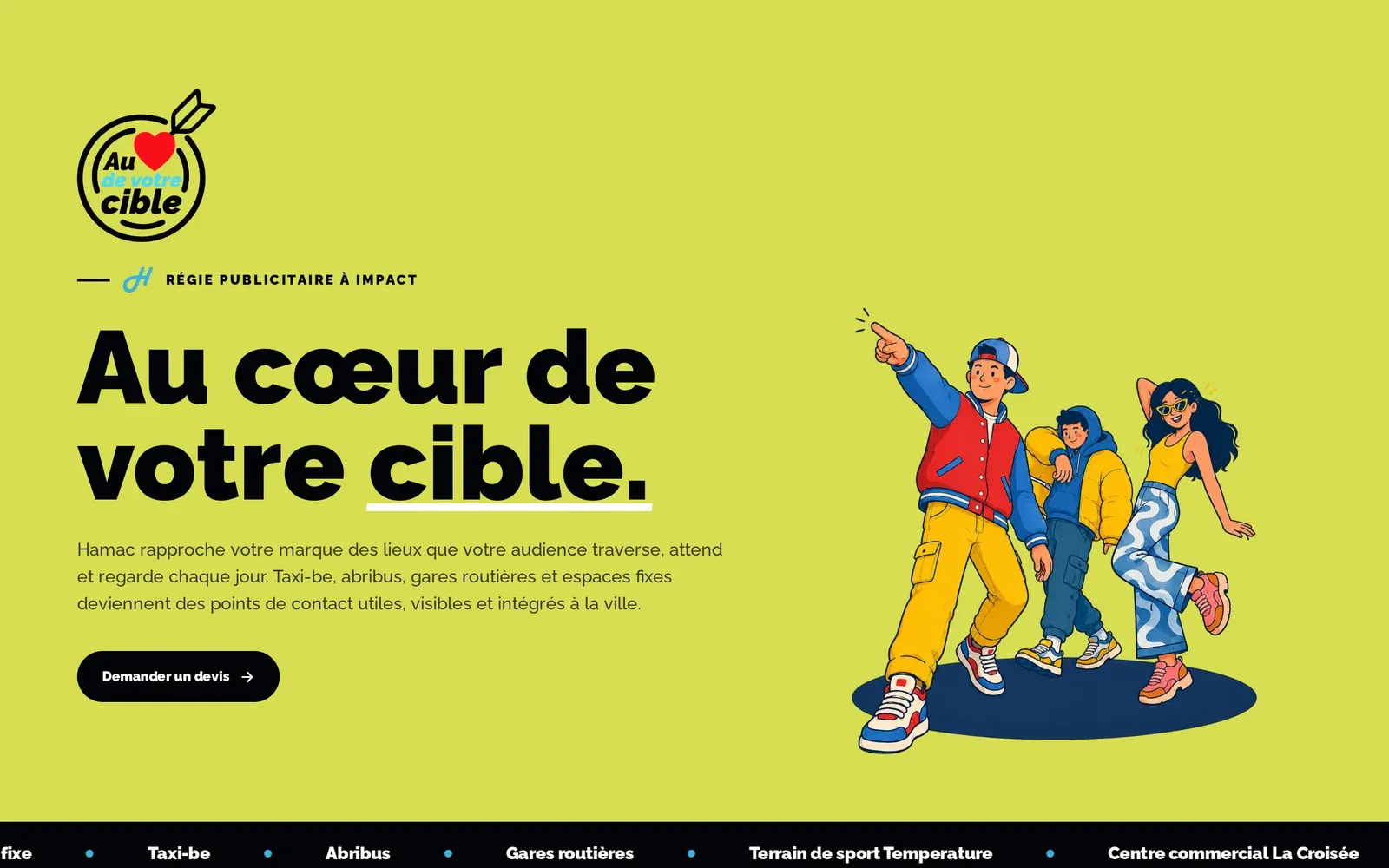
The context
Hamac is an advertising broker based in Madagascar. Its inventory is not a catalogue of traditional billboards: it is a network of vehicles and public locations. On one side are the formats that move — including the shared minibuses known locally as taxi-be, Bus Class and Bus Cotisse — and on the other are fixed locations such as bus shelters, coach stations, a sports ground and a shopping centre.
That range is also the problem. An advertiser discovering the broker does not yet know which medium suits their campaign, or how one format compares with another. The first call therefore opens with a run of questions the page could have asked instead — and while it does, nobody is talking about the project.
There is a second problem, a trickier one, and it decides everything else. The advertisers Hamac wants to win over spend their days in front of a screen. That is where their habits are, their dashboards, their already-committed budget. Talking to them about outdoor advertising means offering a medium they no longer know how to measure — and it has to be done in the very place the medium claims to reach beyond.
What we produced
An offer sorted into two families
Rather than list the sites, the page groups them: moving visibility and fixed visibility. Two cards, two logics of exposure — being seen while travelling, being seen while waiting. Each family names its media explicitly, which lets a visitor recognise themselves in seconds instead of reading through a list.
The rest of the page holds the same contract of clarity: three reasons to choose the broker, a three-step process — scoping, production and sign-off, installation and reporting — and the brands already on the network. Nothing that doesn’t help someone decide.
A form that does the qualifying
This is the heart of the job. The quote request does not settle for a name and a message: it asks for the company, a phone number in Malagasy format, the NIF/STAT registration if the prospect has it to hand, and above all which media they are interested in, ticked from the two families set out above.
A ticked box beats a sentence someone has to interpret. Before opening the conversation, the broker knows whether this is about wrapping a taxi-be or a presence in a shopping centre.
A routed workflow, not just an inbox
Every request goes into an automated workflow that structures it and passes it to the team, rather than becoming another unstructured message in a shared inbox. An anti-robot check protects the send: the form is the site’s commercial front door, and it could not be the front door for spam as well.
And, every month, the voice that keeps it fed
A shop window does not fill itself. Since April 2026 we have produced the broker’s social communication: carousels, stories, short formats, quote cards, media visuals. Around fifteen series, each one built on a reusable master — a Hamac carousel, a story template, a quote template — rather than a fresh file per post.
The editorial angle is the heart of the job, and it comes down to a reversal. The carousel shown below does not open by praising outdoor advertising: it tells the advertiser they are right. “You post every day, you boost your content. And it works.” Then it shifts the question — that audience is made of the people who already follow you, the people looking for you, the people who stumble across you. And all the others?
Only then does the broker have something to say, and it says it in the client’s own terms: an urban presence does not replace a digital strategy, it extends it to where the scrolling stops.
The rest follows the same principle. When a strong location joins the catalogue — the La Croisée shopping centre in Ivato, for instance — it is not announced, it is argued: heavy footfall, high visibility, a single broker to deal with.
What it changes
The page does not try to sell out-of-home advertising — it makes a broker legible to someone who has never bought any. What reaches the team is no longer “a request for information” but a structured brief: an advertiser, a medium and a project.
The first call can then open with the only question that matters: when.
And the shop window is not left waiting on its own. The content goes looking for the advertiser where they work, with an argument that does not set itself against their habits: it is the medium they know that leads back to the one they had forgotten.
In pictures
How it looks
-
The offer fits into two families, and the page never asks the visitor to work out which one applies to them. 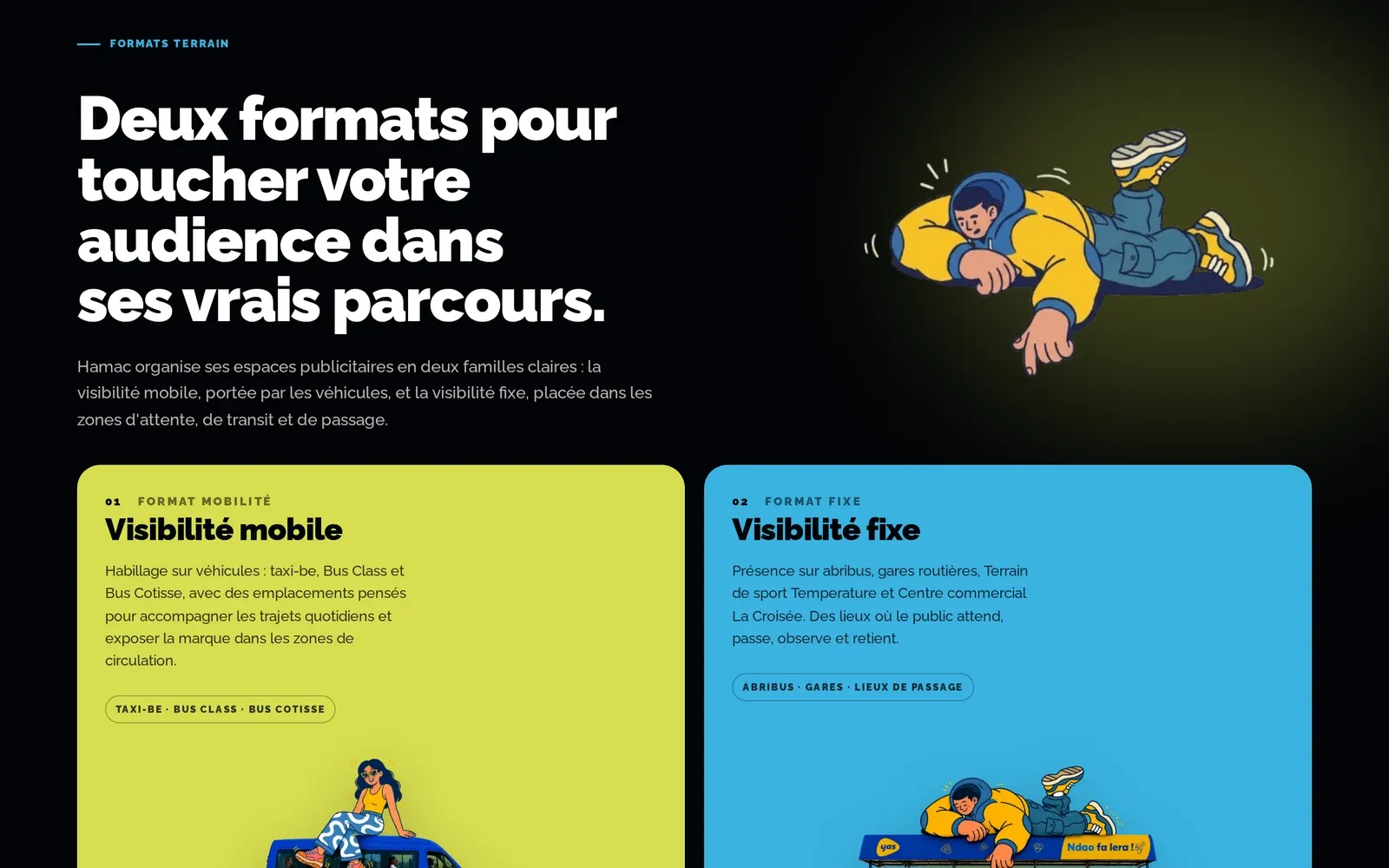
-
The quote form: the medium you want is a checkbox, not something to explain over the phone. 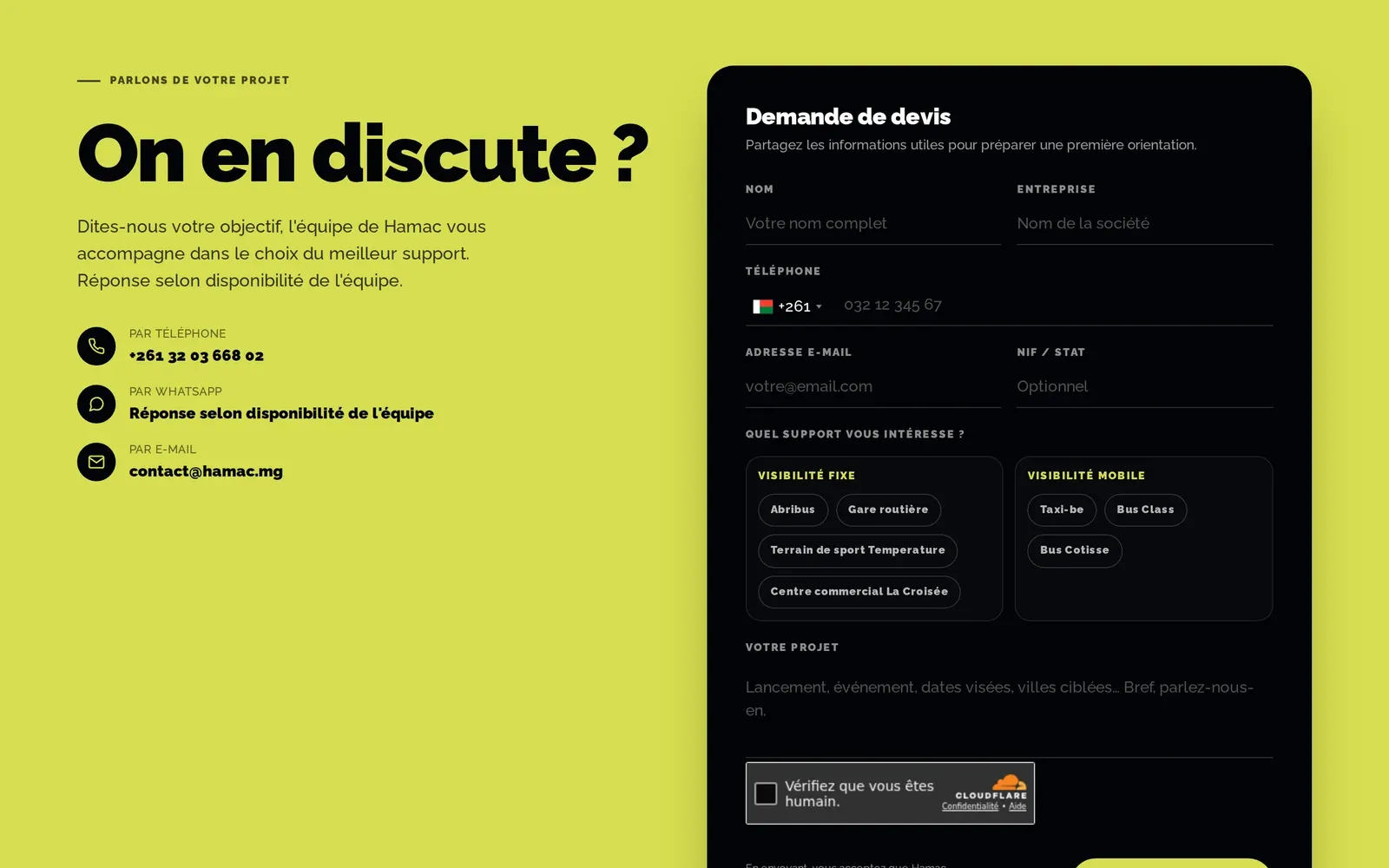
-
The opening plants the doubt before selling anything at all. 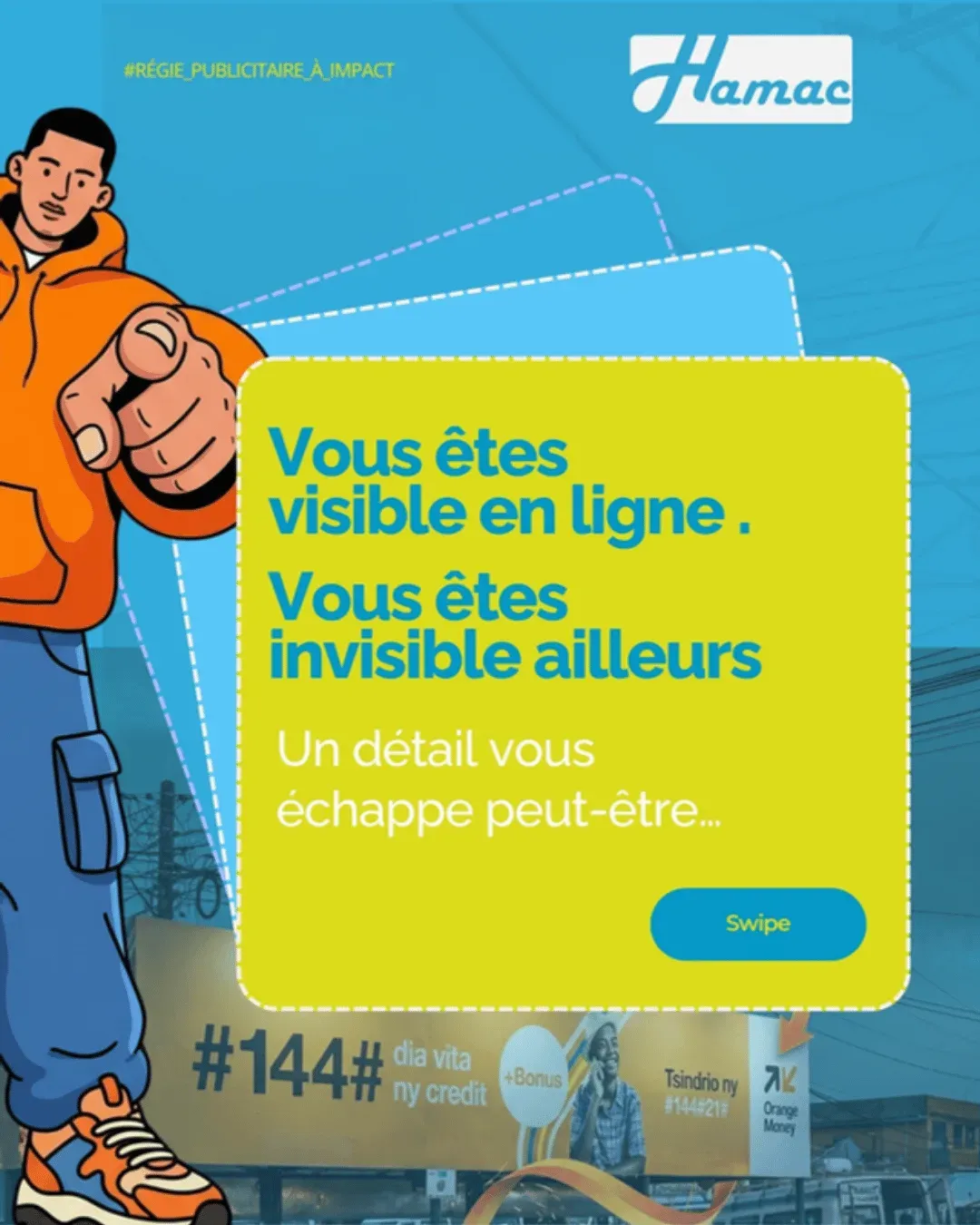
-
We start by telling the advertiser they are right. It is the only way to be read afterwards. 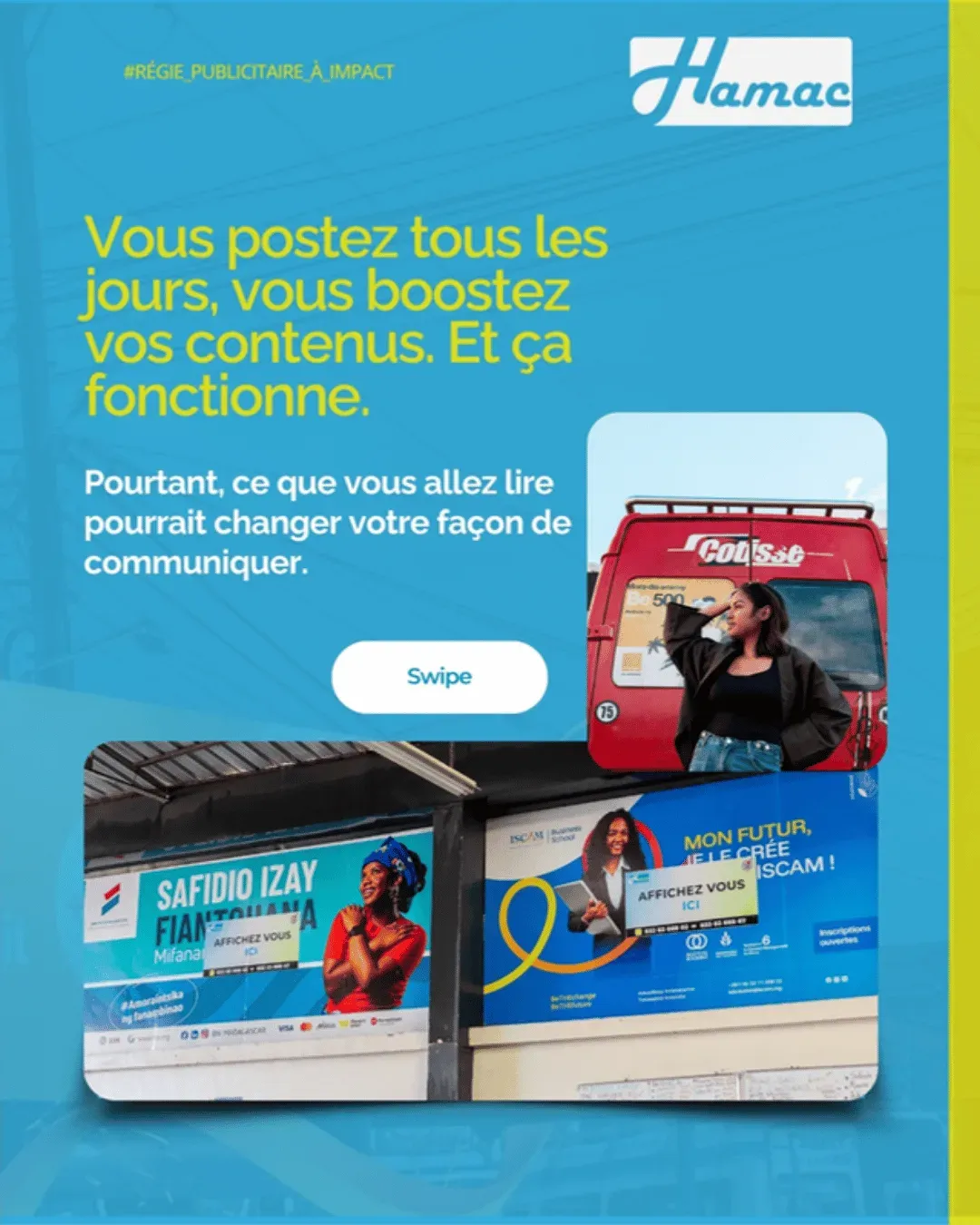
-
The turn, in one slide: the missing audience is the one you walk past outdoors. 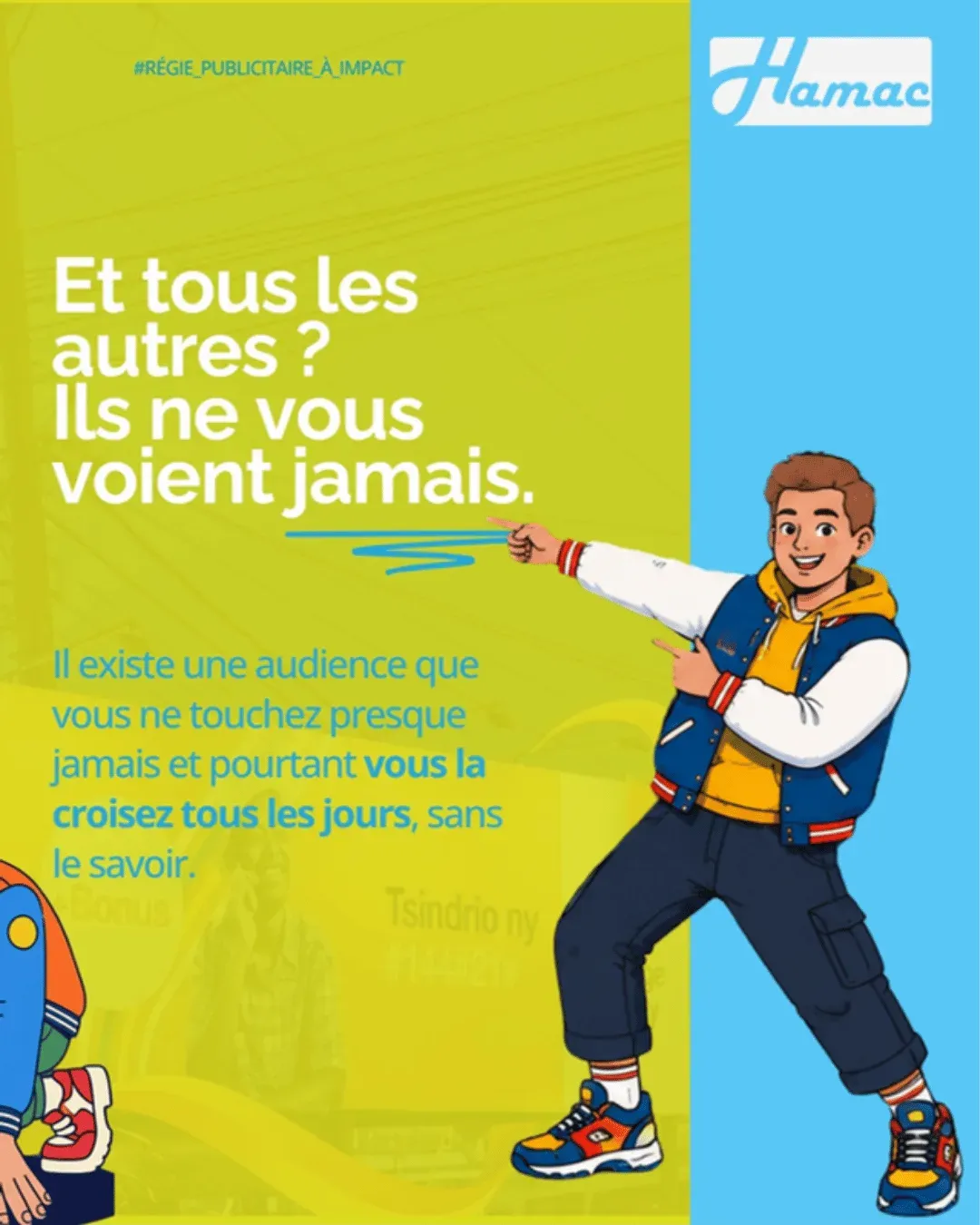
More work
Also worth a look

Jeune Patronat de Madagascar
Jeune Patronat de Madagascar – Making a first edition feel like a fixture
The Jeune Patronat de Madagascar was launching its first major entrepreneurs' gathering. In three months Takamoa built the whole thing — identity, content, video, landing page, campaigns — and handed the stage to a host created with artificial intelligence.
Jeune Patronat de Madagascar
Jeune Patronat de Madagascar – Recruiting at the forum without flying to Paris
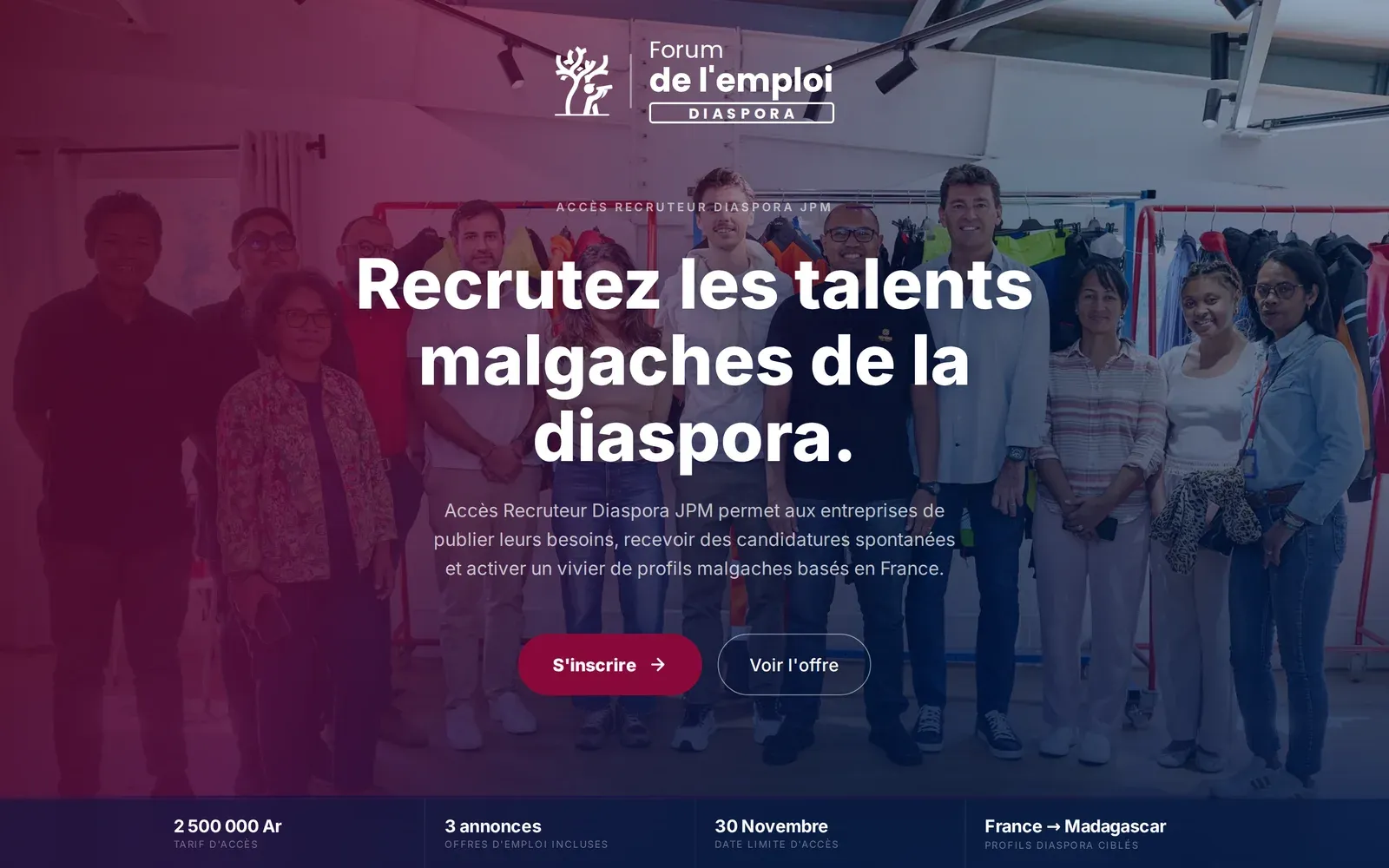
The Diaspora job forum brought Malagasy companies and diaspora talent together in Paris for a job-dating event. We built the platform that stretches those two days into five months, and opens them to the companies that could not make the trip.
Seraiko
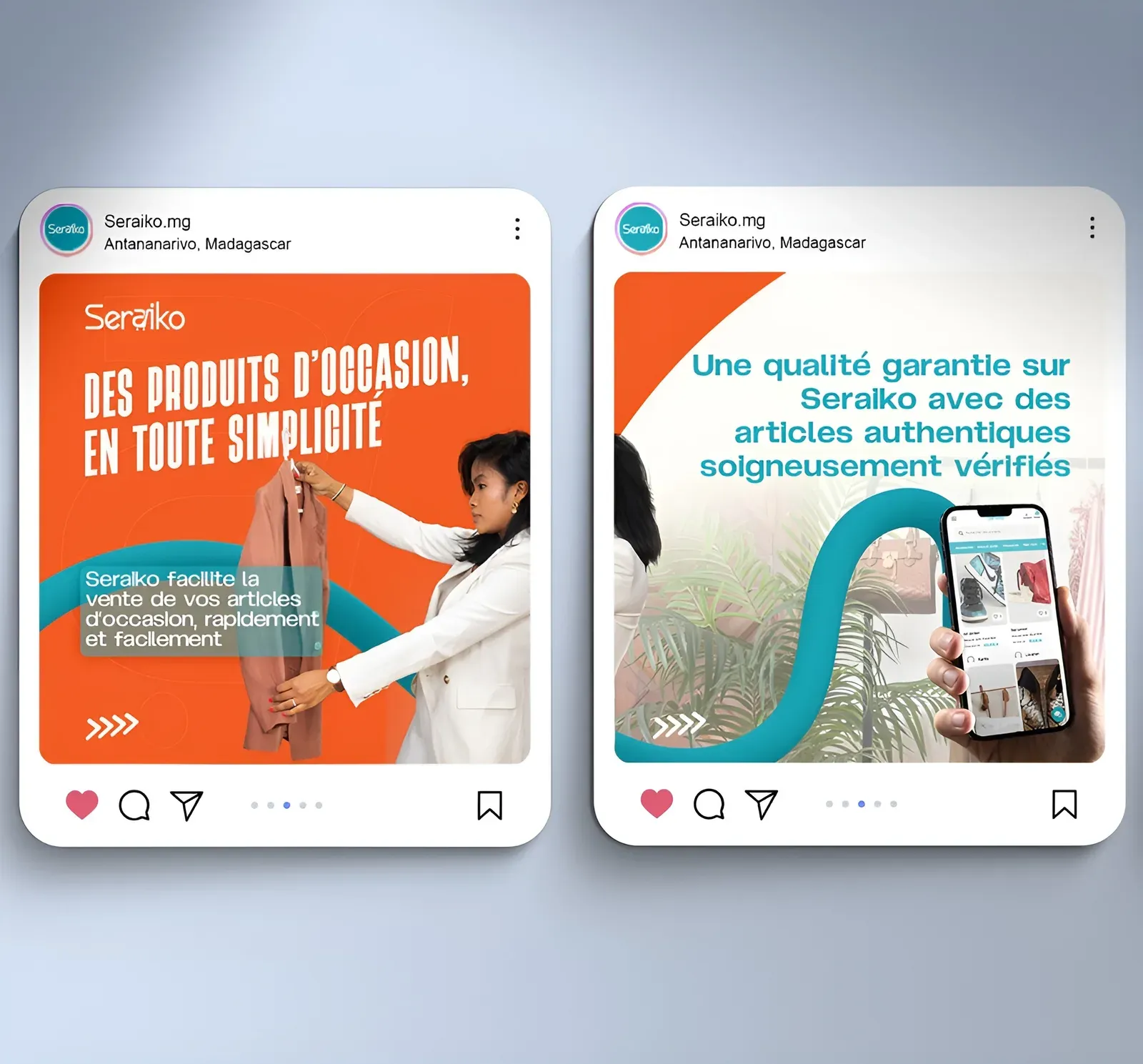
Seraiko – Launching the first second-hand marketplace in Madagascar
Arriving on the market, Seraiko.mg set itself an ambitious goal: to become the reference for second-hand e-commerce in Madagascar. But making that stick quickly took more than simply being there.